

Camomile Tea Benefits: What We Can and Cannot Tell You
Camomile is the bedtime tea. Everyone knows what it is for, and every brand selling it will happily tell you it helps you sleep.
We are not going to, and the reason is more interesting than you might expect.
What is actually in camomile
Camomile is an infusion of dried flower heads, usually Matricaria chamomilla, German camomile. Like peppermint and rooibos it has nothing to do with the tea plant, so there is no caffeine in it at all.
The compound everyone points to is apigenin, a flavonoid that in laboratory conditions binds to the same receptors in the brain that benzodiazepines act on. That is a genuinely interesting finding and it is where the whole sleep story comes from.
Camomile also contains bisabolol and chamazulene, which give the oil its character, and the flowers carry the honeyed, faintly apple-like flavour that good camomile has and poor camomile does not.
What the sleep research actually found
Here is where the story gets less tidy than the packaging suggests.
The most frequently cited human study is a randomised, placebo-controlled trial of standardised camomile extract in adults with chronic insomnia. It found no significant difference between camomile and placebo on the sleep measures it set out to test: total sleep time, sleep efficiency, how long people took to drop off, or how often they woke. There were small hints of improvement in daytime functioning, but they did not reach statistical significance.
That is the study people cite in favour of camomile.
Two further points worth knowing. No randomised trial has tested isolated apigenin for sleep in humans at all, so the receptor finding remains laboratory work rather than proven effect. And the trials that do exist use standardised extracts at doses far above what a teabag delivers.
What we are not allowed to say
Only health claims listed on the GB Nutrition and Health Claims Register may be used by food businesses in Great Britain. There is no authorised claim for camomile and sleep, or camomile and relaxation.
Which means the single sentence every camomile brand wants to write is the one none of us is permitted to. When you see it anyway, that tells you something about the brand.
So why does it work for so many people?
Here is our honest view, and it is not a claim about camomile.
Making a cup of camomile at ten o'clock means stopping. It means standing in a quiet kitchen for three minutes while a kettle boils, putting a phone down, and holding something warm. It marks the end of the day in a way that scrolling does not.
Whether the apigenin is doing anything is genuinely unclear. Whether the ritual is doing something seems much more likely. We would rather say that plainly than pretend the chemistry is settled.
It also happens to taste lovely, if it is good camomile. Which brings us to the part that actually matters.
Most camomile is poor, and it is easy to tell
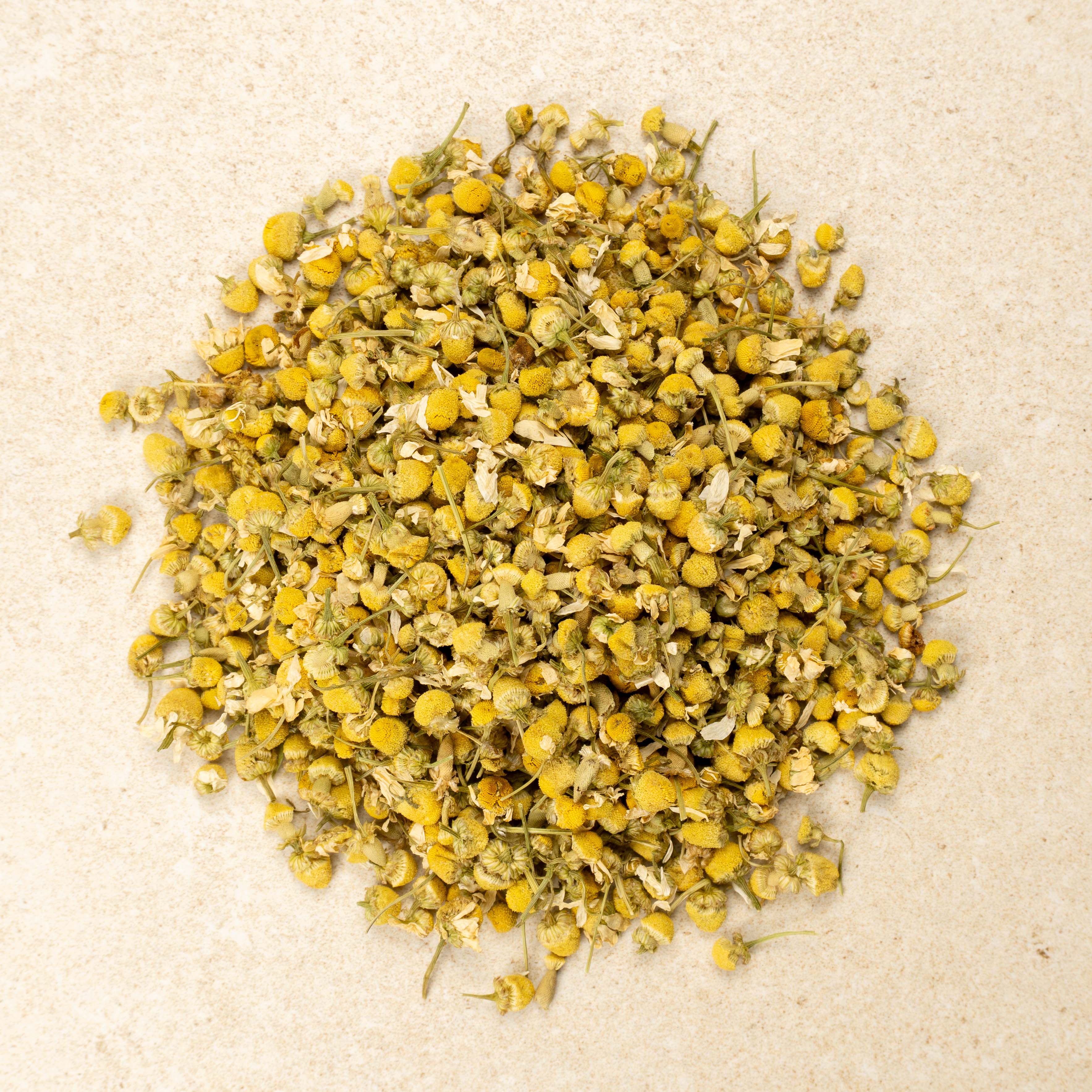
Cheap camomile is made from dust and broken flower fragments, and it brews thin, papery and slightly bitter. Whole flower heads brew golden, sweet and faintly of apple, which is what camomile is supposed to taste like.
You can see the difference before you taste it. Tip some into your hand. If you can make out individual flower heads, you have got the good stuff.
Ours is Egyptian camomile, whole flowers, available as loose leaf or in plastic free string and tag bags.
Brew it with water just off the boil for five minutes, covered. Longer does no harm.
One safety note. Camomile belongs to the same plant family as ragweed, daisies and marigolds. If you have a known allergy to those, it is worth being cautious, and worth asking a pharmacist if you are unsure.
Keep brewing, The Bellevue Team



Leave a comment
This site is protected by hCaptcha and the hCaptcha Privacy Policy and Terms of Service apply.