
How Much Caffeine Is in Tea? Building a Tea Routine That Works
Tea drinking has changed a lot since the days of one strong cup with milk in the morning and nothing else. Most of us now drink different teas at different points in the day, and there's a good argument that this is exactly how it should be.
The question we get asked most often, usually by someone deciding whether a fourth cup is wise, is how much caffeine is actually in a mug of tea.
How much caffeine is in a cup of tea?
The honest answer is that it varies more than most charts admit. How much leaf you use, how hot the water is and how long you leave it all change the result. But as a rough guide, per mug:
- Black tea: roughly 40 to 70mg. Our English Breakfast, Belter and Best Brew all sit in this range.
- Matcha: around 60 to 70mg, higher than other green teas because you drink the whole leaf rather than an infusion of it.
- Green tea: roughly 20 to 45mg. Sencha Green and Nilgiri Green are lighter than a breakfast tea, but not caffeine free.
- White tea: roughly 15 to 30mg, the lowest of the true teas.
- Decaf: usually under 5mg. Ours is decaffeinated using CO2 rather than chemical solvents, so more of the flavour survives.
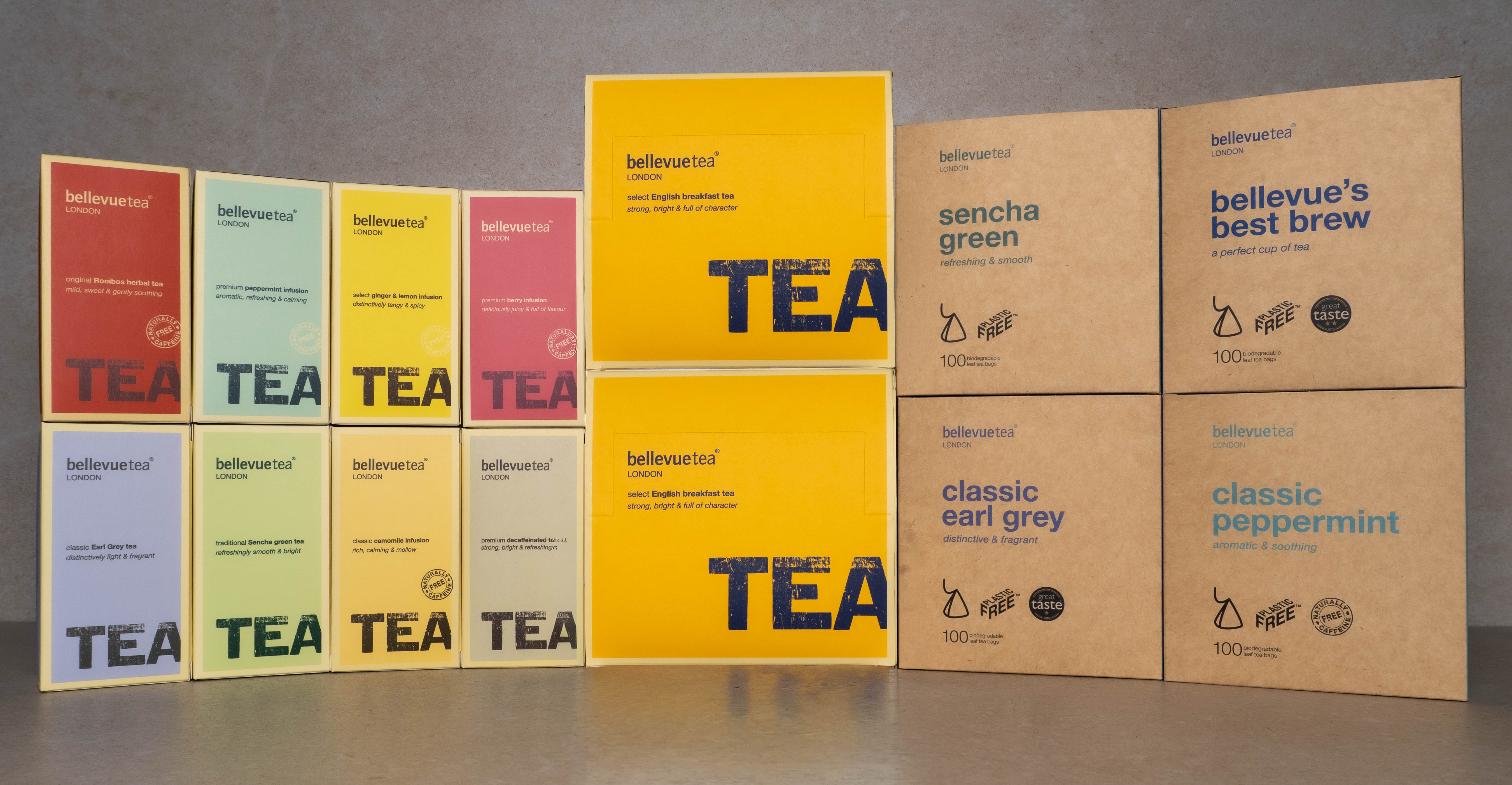
- Herbal infusions: none at all. Camomile, peppermint, rooibos, berry and ginger & lemon aren't made from the tea plant, so there was never any caffeine in them to begin with.
For comparison, a mug of filter coffee is usually around 95mg. Even a strong builder's tea comes in comfortably under half of that.
Worth knowing: the ranges overlap. A green tea brewed hot and left for four minutes can easily out-caffeinate a weak black tea. If you're sensitive to it, brewing time is the lever that matters most, not the colour of the leaf.
Building a tea routine
Here's how a tea day can look if you give it a bit of thought:
Morning: A proper English Breakfast or Assam. Something with backbone that works well with milk and sets you up for the day.
Mid-morning: Sencha Green. Lighter in caffeine than a breakfast tea, and a good swap for a second coffee.
Afternoon: Darjeeling. Lighter and more fragrant than a breakfast tea, it's ideal for the mid-afternoon lull when you want something civilised but not too heavy.
Evening: Rooibos or Camomile. Naturally caffeine-free, so they won't keep you awake.
There are no rules about how many cups is the right number. But having a small range of teas to choose from makes the whole day better, and lets you dial the caffeine up or down as the day goes on.
Browse our tea bags and leaf teas on the website. Buying a selection is a good way to start building your own tea routine.
Keep brewing, The Bellevue Team



Leave a comment
This site is protected by hCaptcha and the hCaptcha Privacy Policy and Terms of Service apply.